
About the Gentle Furies
Founded in 2011, the Theatre of the Gentle Furies is a collective of artists who tell old stories in new ways. We draw on the myths of the past to offer new ways of seeing the present — hoping, in the process, to help bring about a better future.
In Greek myth, Furies are terrifying earth spirit spirits who haunt those who’ve murdered their loved ones. In their most famous story, these monsters — always imagined as feminine — pursue Orestes for killing his mother, only to be defeated by gods who believe men are superior to women. This story was the basis for the show that originally brought us together.
To re-imagine the Furies’ rage as gentle is a bit of a paradox, but that sums up the work we make. Our work is old, new, and looking to the future. It is serious about the problems our world faces – misogyny, queerphobia, climate disaster, to name just a few – but approaches these problems with camp irreverence and a love of the ridiculous. It is full of fury but full of gentleness, too.
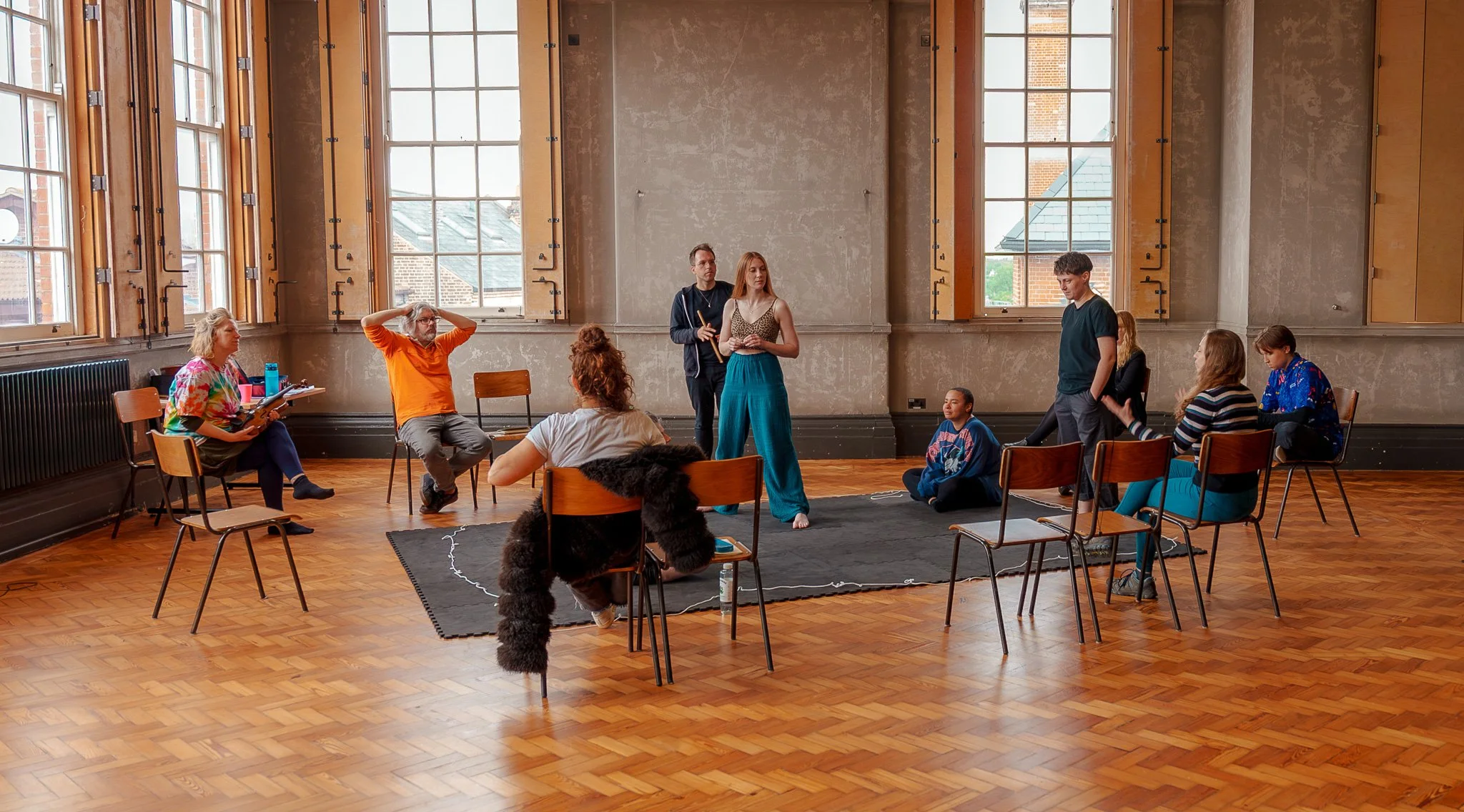
Trust, play, and collective curiosity shape everything we make. Collaboration and community are thus at the heart of what we do, which is reflected in our work with theatres, galleries, museums, and universities. It is also part of the skills-sharing workshops we offer, extending insights from more than fifteen years’ experience in storytelling and sustainability beyond the work we ourselves produce.
We are a registered charity. Although our work is often supported by organisations such as Arts Council England, we receive no regular government funding. You can make a big difference by becoming a supporter over on Patreon, where every donation has an impact.
If you want to get in touch with us, email us at info[at]gentlefuries.com
The Story of Our Furies
-
In 2011, a group of Drama, English, and Classics graduates from Royal Holloway, University of London created a new show based on the ancient Greek myth of Electra, Orestes, and the Furies. The group wanted to make something about the experience of surviving as a woman in a patriarchal world by playing with the similarities and differences between that mythic world and our own real one. The next year, the show was redeveloped and put on again in London - and we became By Jove.
-
As By Jove, we made eight new shows between 2012 and 2021. We reimagined Shakespearean protagonists to speak to queer, Black lives and the complexities of women in positions of power. We staged new encounters with violent women of myth and history, moving beyond the usual tropes invoked by these figures. And, in our most beloved show, we had a lot of fun with Jane Austen, sending up Pride and Prejudice and its legacy, feminist and not so feminist.
-
In 2018 we started making what turned out to be By Jove’s last show. We had returned to Electra and her tragic family, this time to think about their queerness. Our shows take time to make as we develop them between long periods of writing and reflection and bursts of rehearsal room time. On this occasion, a pandemic came along just as the show looked like it was heading to the final stages. So amidst lockdown we tried something new: a digital installation that ended up premiering a decade after we started out as a company. When we were seeking a name for that work, our brilliant artistic associate Alexander ‘Woody’ Woodward said, ‘you know, I think this is our gentlest piece of work so far.’ And there it was – The Gentlest Work.
-
As lockdowns ended and we tried to resume ‘normal’ life, we came to the realisation that By Jove’s journey finished with The Gentlest Work — we weren’t the same people we had been in 2011. But we still wanted to make art together. Back then, we were recent graduates, filled with righteous rage and a desire to burn it all down. A decade on, our rage was still there but transformed by a desire to do something a little more loving, a little more gentle – we still wanted to burn down unjust systems of oppression, but we also wanted to find ways of creating new, kinder worlds.
In searching for a new identity, we kept coming back to the Furies. At the end of Electra and Orestes’ story these Furies are transformed into something new – although still terrifying, they become a little more gentle. In our shows based on these characters, we echoed the voices of many feminist and queer thinkers who have said this ending is a bad compromise, another way for patriarchy to flourish while women are disempowered. If that was the case in ancient Greece, we hope that in our very different world we can do things differently, pursuing our mission with the same tenacious fury but tempered now by a desire for a world that is a little more gentle.